
Michaelmas Cay
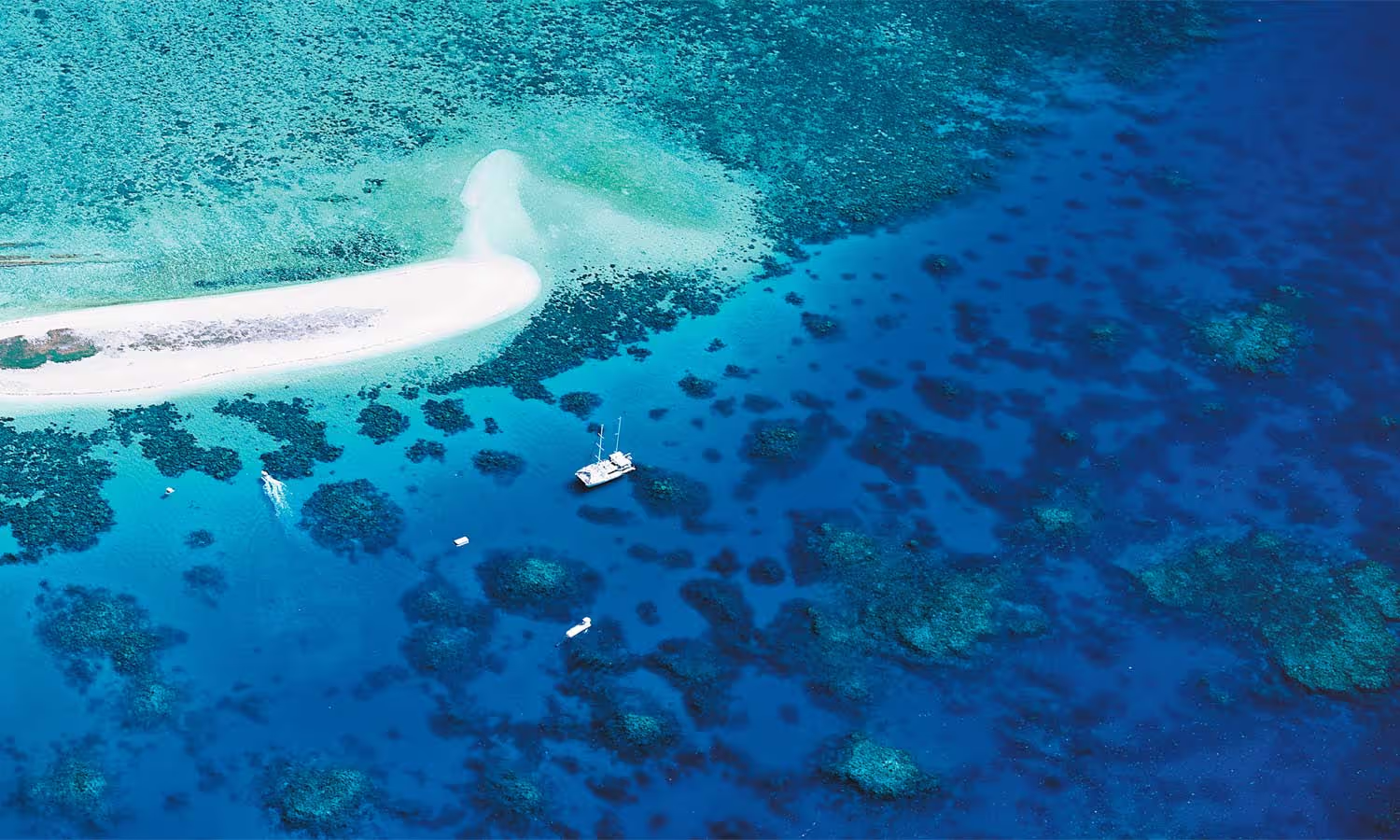
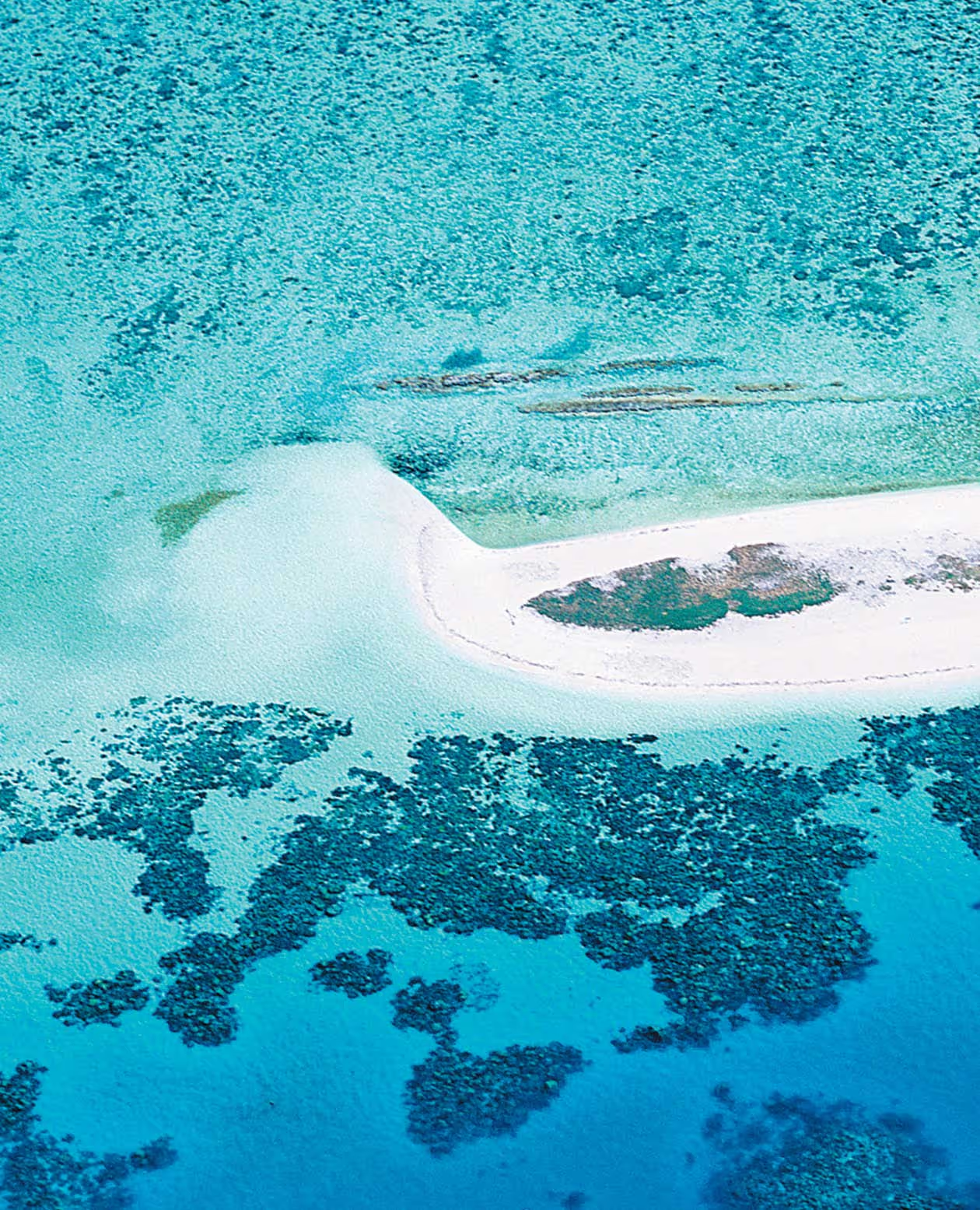
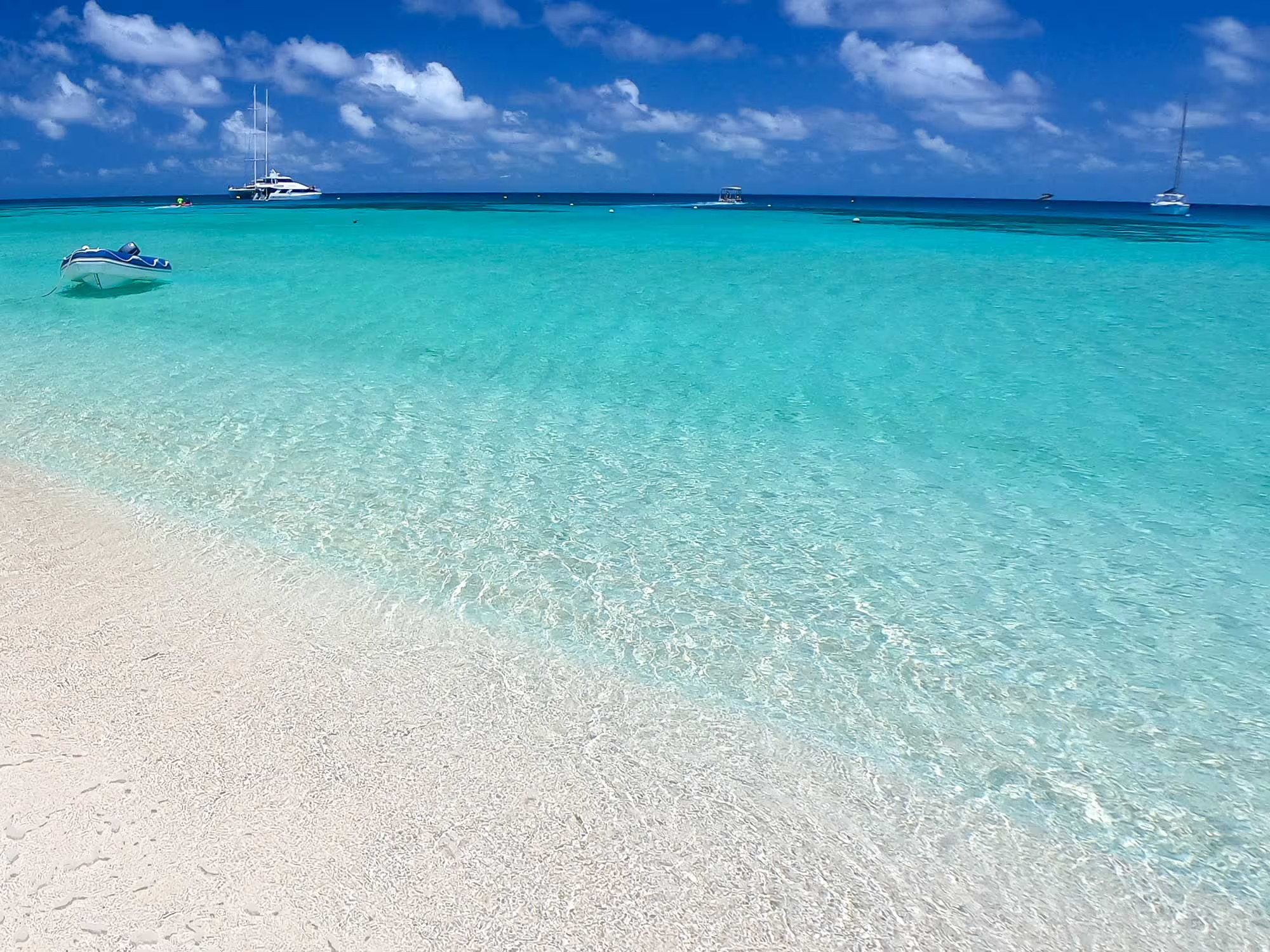
The vegetated coral reef island covers and area of 1.8 hectares and rises to a height of 3.5m above sea level. Around 360m long x 50m wide.
Michaelmas Cay was formed by the accumulation of broken coral, shells and remains of calcareous algae, continually washed over the reef by currents. Seeds deposited by visiting birds over time, and the resulting vegetation, helped to stabilise the cay.
The formation of beach rock (sand and other reef remnants cemented into a rock by the action of algae) further stabilised the cay. The seeds carried in by the birds and the waves help vegetation flourish which in turn provides and ideal habitat for the seabirds to roost and nest.
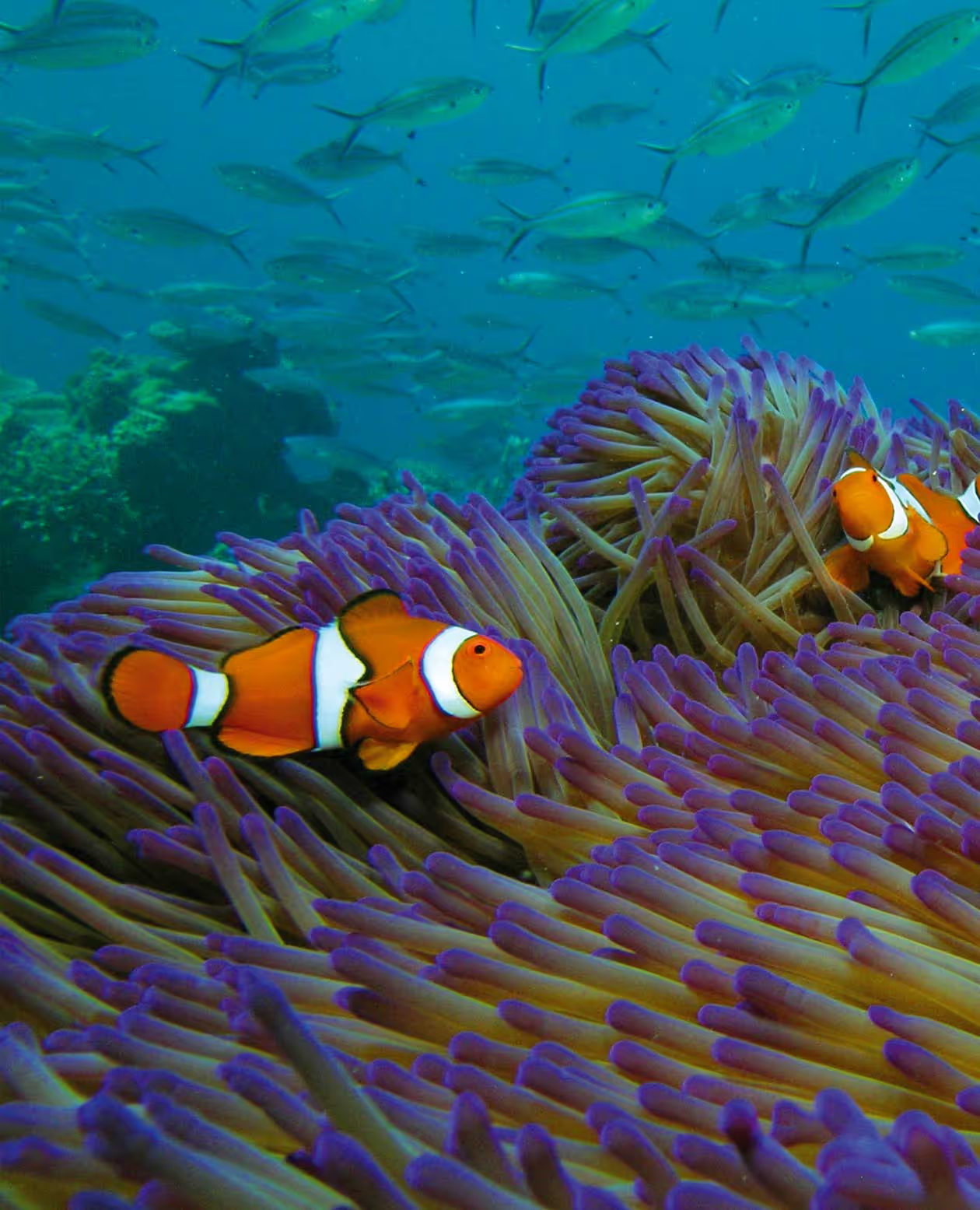
The Cay is rich with a myriad of sea life including green sea turtles (which occasionally nest on the cay), molluscs and invertebrates of all kinds and hundreds of species of tropical reef fish including Humphead Maori Wrasse. The reef surrounding the Cay is especially renowned for its abundance of giant clams.
The Cay's vegetation is low growing and composed of grasses including sand Spinifex sericeus, stalky grass Lepturis repens and other cover such as goat's foot vine and bulls head vine andSea purslane Sesuvium portulacastrum.
For a period during the late 1800s and early 1900s the island was used by sea cucumber pickers (Beche-de-mer) and for guano mining. In 1937 it was declared a fauna sanctuary and formally a national park in 1975. The Cay has cultural significance to the local Gungandji, Mandingalbay-Yidinji and Yirrriganydji indigenous peoples.
Note: Access to Michaelmas Cay is only allowed between 9:30am and 3pm daily and is limited to the restricted access area marked out by rope.
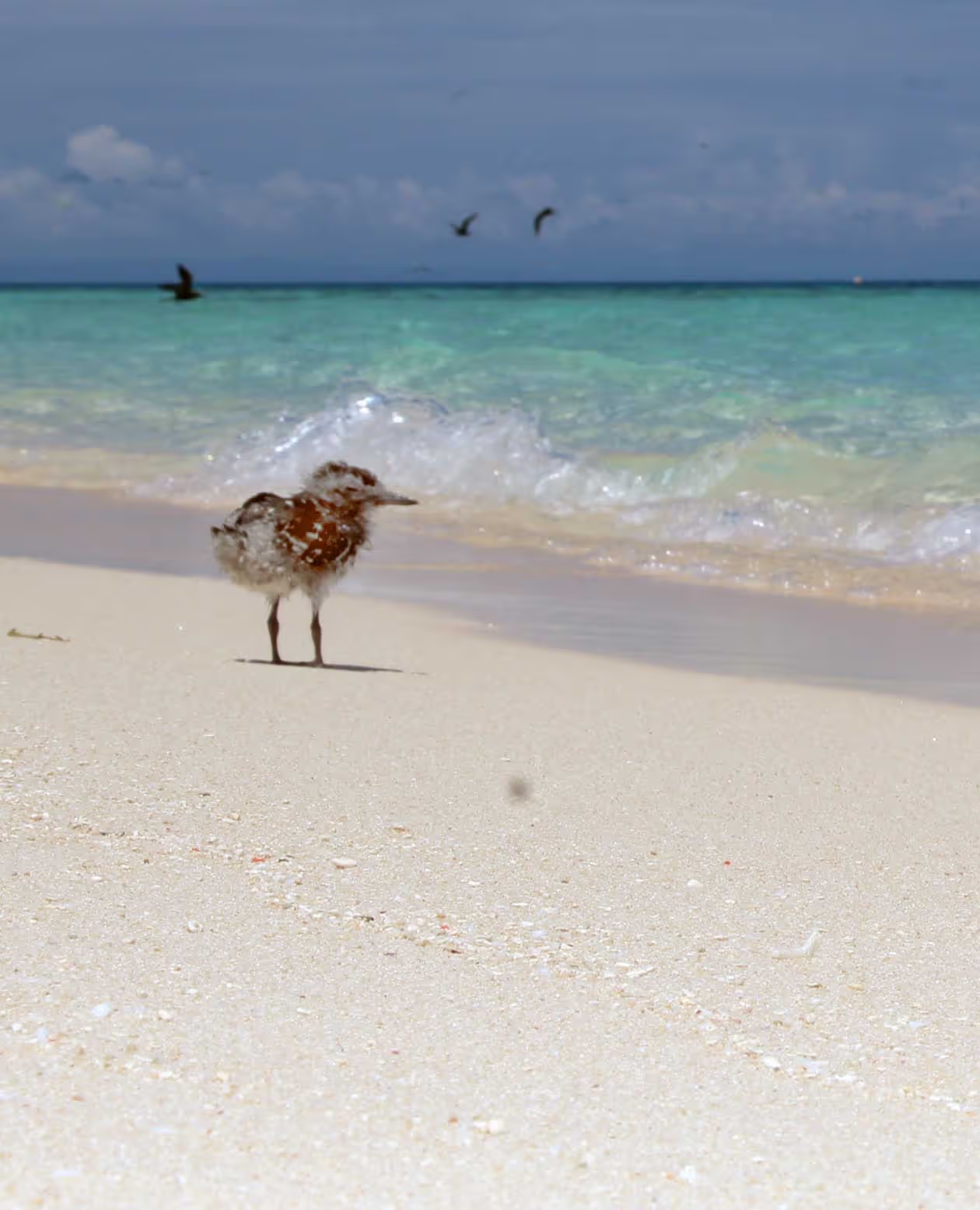
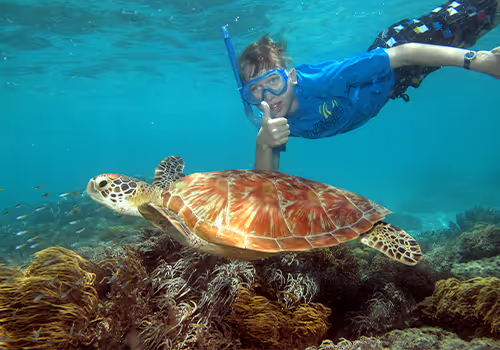
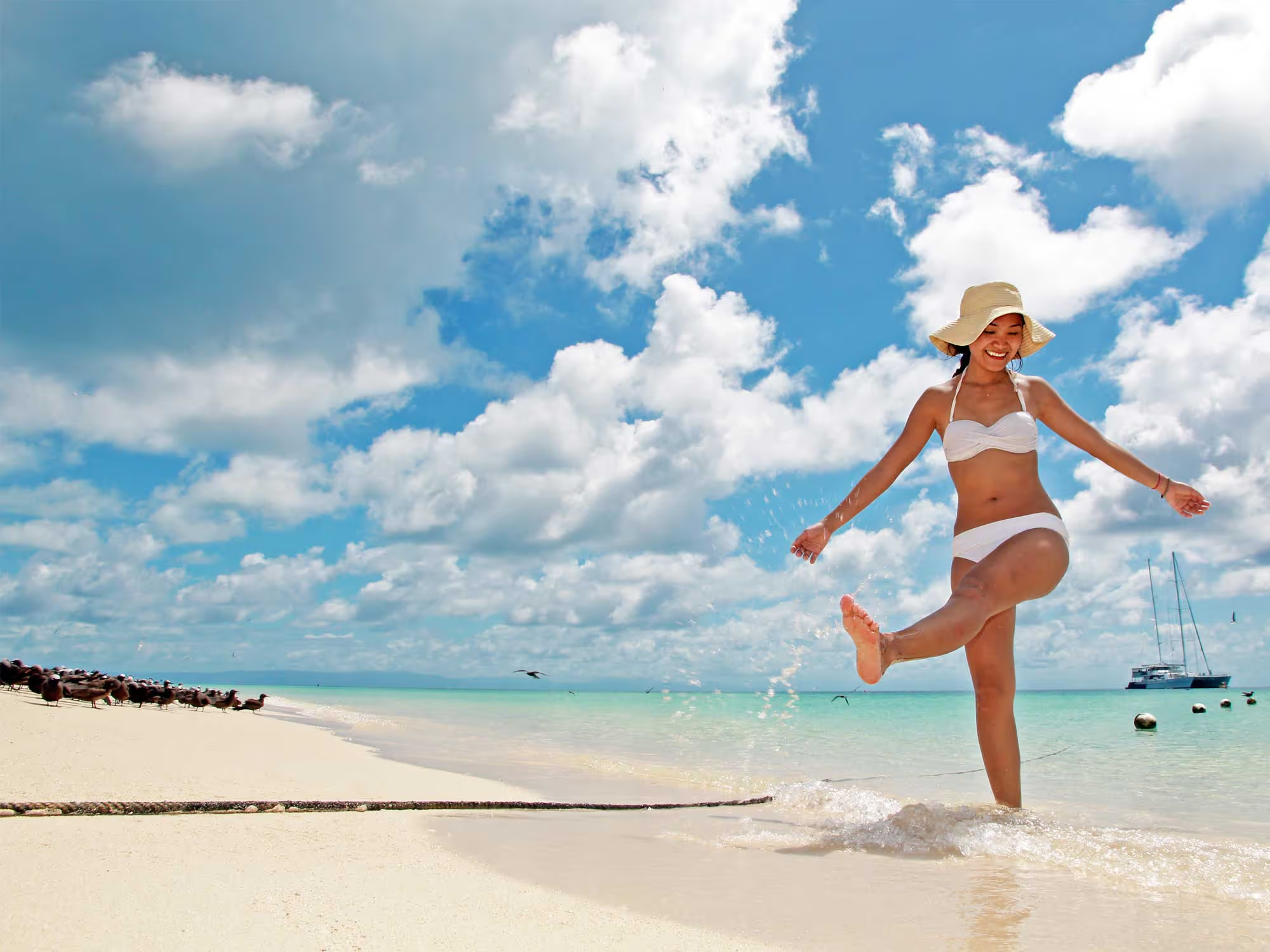
Michaelmas Cay is a major natural seabird habitat and one of the most important in the Southern Hemisphere. It is home to at least 23 species of seabirds. Many breeds find this island an ideal nesting habitat and is one of the most significant bird sanctuaries on the Great Barrier Reef.
At the height of nesting and breeding season (during Summer months) up to 20,000 birds have been observed. Breeding activity occurs throughout the year, most of the seabird species breed annually, Sooty Terns breed every 8.5 months.
Onychoprion fuscata
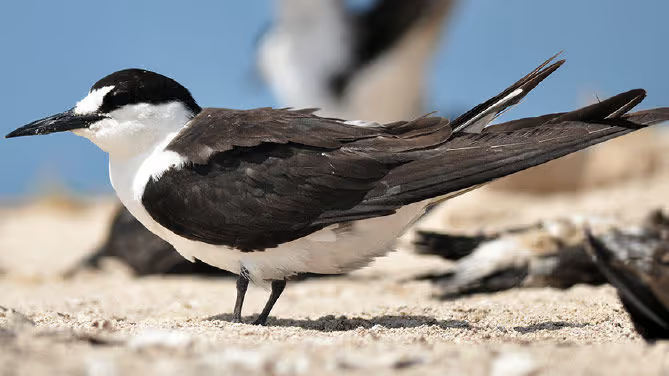
Onychoprion fuscata
Length: Around 33-36cm.
One of the largest numbered and most common seabirds found at Michaelmas Cay.
Colours: Dark black upperparts and white underparts. Black beak and black legs. Has similar colouring and pattern to the Bridled Tern.
Anous Stolidus

Anous Stolidus
From the Tern family, the largest of the noddies, it can be told from the closely related Black Noddy by its larger size and plumage, which is dark brown rather than black. A single egg is laid by the female of a pair each breeding season.
Colour: Whole body covered in dark black-brownish feathers except white marking around eyes and head.
Thalasseus bergii

Thalasseus bergii
Length: 46-49cm long.
They feed by plunge diving for fish, the male offers fish to the female as part of the courtship ritual.
Colours: Grey upperparts, white underparts, a yellow beak, black legs and a shaggy black crest cap which recedes in winter.
Thalasseus bengalensis
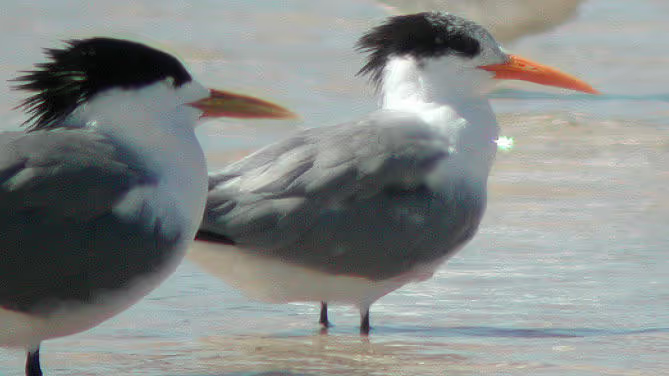
Thalasseus bengalensis
Length: Less than 40cm.
Similar look to Crested Tern but smaller in size and an orange beak instead of yellow.
Distinctive black cap but smaller than the Crested Tern. Breeds on Michaelmas Cay during Summer (October-December).
One of the most commonly found birds here.
Colours: Grey back, white underparts
Sterna sumatrana

Sterna sumatrana
Length: About 30cm long with a wing span of 21-23cm.
Their beaks and legs are black. They have long forked tails.
Colours: White face and breast with a greyish-white back and wings. Black markings at the back of neck. The first couple of their primary feathers are grey
Sula lecogaster

Sula lecogaster
Length: 75cm, wing span up to 1.4m. Females larger than males.
Dives from over 40 metres into the water to catch fish. Females have a blue spot in front of eye. Beak stout and straight.
The name "Booby" comes from the Spanish word "bobo" meaning fool because sailors thought these birds were stupid.
Colours: Dark black and underparts white with brown throat.
Fregata minor

Fregata minor
Length: 85-105cm in length with a wingspan over 2m. Males are smaller than females.
These 'pirates of the sky' often chase and harass other seabirds to steal their food.
Colours: Males are black with scapular feathers that have a green iridescence when they refract sunlight. Females are black with a white throat and breast and have a red eye ring.
Sterna caspia

Sterna caspia
Length: Largest in the Tern family, Caspian has a length of 48-60cm and a wingspan of 127-145cm.
Black legs, a thick red-orange beak with a small black tip.
Colours: Upperparts are pale grey; Black cap and white neck and underparts.
Sterna nilotica

Sterna nilotica
Length: 33-42cm.
The Gull Billed Tern has a thicker beak than other Terns.
Black cap, strong black beak and black legs.
Colours: Grey upperparts, white underparts.
Egretta sacra
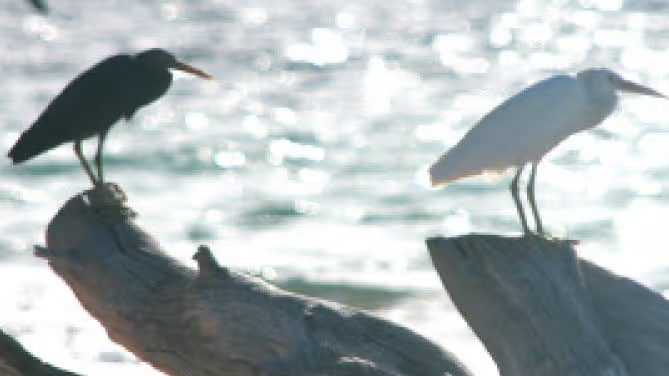
Egretta sacra
Length: Medium sized herons, reaching 57-66cm.
Reef herons come in two colours - white and grey. Although they look different, they are the same species. It is a lot like humans having either blue or brown eyes.
These birds are ambush hunters, able to stand still at the water's edge for long periods waiting for prey (crabs, fish). They use their beaks to stab the prey, then they toss the food into the air and swallow it (fish are always swallowed head first to avoid choking on spiky fins).
Colours: Dark black upperparts and white underparts. Black beak and black legs. Has similar colouring and pattern to the Bridled Tern.
Arenaria interpres

Arenaria interpres
Length: Less than 23cm.
These small shorebirds migrate every year from the Arctic Circle to the Great Barrier Reef. Seen from September - April.
Their name comes from using their beaks to flip over rocks and shells to look for food such as worms, sand fleas and small crabs to eat.
Less than 23cm long, black beak, orange red legs.
Colours: Upper parts greyish brown with white lower back and rump; Underparts: white, dark throat.
Sterna albifrons

Sterna albifrons
Length: 21-25cm long.
Like most other white terns, the Little Tern feeds by plunge-diving for fish, the offering of fish by the male to the female is part of the courtship display.
Some groups of these birds fly between Japan and Australia. They have orange legs, and a yellow beak.
Colours: Grey wings, white underparts. Looks like its wearing a black hood on its head.
Sterna dougalli

Sterna dougalli
Length: around 33-36cm.
A small/medium tern, in summer / mating season, the underparts of adults take on the pinkish tinge which gives this bird its name.
Red beak and legs, long tails.
Colours: Wings are pale grey and its under parts white.
Anous minutus

Anous minutus
The Black Noddy is a seabird from the Tern family.
It resembles the closely related Brown or Common Noddy but is smaller with darker plumage, a whiter-greyish cap, a longer, straighter beak and shorter tail.
Larus novaehollandiae
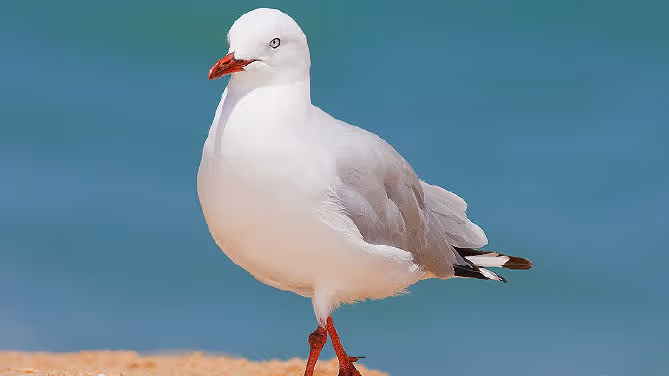
Larus novaehollandiae
Length: Less than 42cm long.
Present all year and commonly seen along coastlines.
Omnivorous Scavengers. They often steal eggs of terns and from unprotected nests.
Colours: White body with bluish grey back and wings. Red beak and legs
On very rare occasions all cruise services can be subject to the effect of weather or unforeseen circumstances. Should a cruise not operate for any reason, passengers will be offered an alternative day or a refund authorised.
If you'd like to know more about the current weather we have 3 day forecasts and receives weather updates every morning from the bureau of meteorology as well as from crew. Guests can call our office from 6am onwards for an update.

Ocean Spirit is proud to have achieved Advanced Ecotourism Certification for our Michaelmas Cay cruise - the highest eco certification attainable in Australia. This ensures our visitors have the opportunity to learn about and appreciate the environment, and as an operator, highlights our commitment to the ongoing conservation of this most important World Heritage area.
Under Ecotourism Australia's Eco Certification Program, Ecotourism is defined as: "Ecologically sustainable tourism with a primary focus on experiencing natural areas that fosters environmental and cultural understanding, appreciation and conservation."
The Eco Certification Program is an initiative of Ecotourism Australia, which has established an Eco Certification Program Management Committee to provide policy and management support for the program.
The Eco Certification Program operates as a self-funding, not-for-profit program, with a Management Committee overseeing an Audit and Assessment Panel, which are chaired by a person independent of Ecotourism Australia.
Credibility with industry, communities and travellers is at the heart of the Eco Certification Program. This is maintained through:
A rigorous assessment process including referees (one of whom must be a protected area manager)
Review and updating of criteria every three years to reflect emerging best practice
Feedback from customers of accredited operators
Audits of operators, including an on-site audit on the entire set of the Eco Certification Program criteria at some stage during the period of accreditation.